
Navigation

Free Ebook!
eBook
Name:
Email:


Recovery and Sports Injury Prevention

ELITE ATHLETE | YOUTH ATHLETE | MASTERS ATHLETE |
SPORTS NUTRITION | RECOVERY AND INJURY PREVENTION |
GOLF FITNESS

"The American College of Sports Medicine estimates that 50% of overuse injuries in children and adolescents are preventable."
Overuse Injuries in Children and Adolescents, Physician and Sports Medicine, Vol. 27 No. 1 Jan. 1999

Recovery and Injury Prevention are two key components of any sports performance program. In 2006, the USOC opened a $725,000 Athlete Recovery Center at its national headquarters in Colorado Springs, Colorado. "It is the USOC Athlete Recovery Center, weightlifter Casey Burgener said, that is "hands down probably the most beneficial thing they've given us." The center, which replaced a campus library in September 2006, has been a "slam-dunk success," said Bill Sands, the sports scientist who heads center operations. "At this level," said Patrick Borkowski, a U.S. strength and conditioning coach, "the littlest things separate success from failure." (Washington Post 02/19/08 p. E01)

Here at Maryland Sports Injury Center, we would say that at ALL LEVELS it is the small things that separate success from failure. We have several unique programs to address these issues:

CARE AND PREVENTION OF ATHLETIC INJURIES

Dr. Horwitz teaches Care and Prevention of Athletic Injuries, a required class for all first time MCPS coaches. Click Here for more information.

ACL INJURY PREVENTION

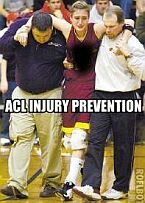
1 in 100 high school female athletes will suffer a serious knee injury. ACL injuries in female athletes are so widespread that coaches of high school and college teams expect at least one player to be sidelined by an ACL injury every season. This is inexcusable! Don't let this happen to your child! Read our article on ACL INJURIES IN FEMALE ATHLETES. You can find out in 3 minutes if your child is at risk for a devastating injury.

We use SPORTSMETRICS exclusive software for video analysis of jumping mechanics. The software provides visual depiction of the athlete’s mechanics during a jump/land sequence. From this analysis a training program is designed to build the strength and mobility necessary to restore proper positioning of the hips, knees, and ankles and to prevent injury.

"Participation in intercollegiate athletics involves unavoidable exposure to an inherent risk of injury."
The 2005-2006 NCAA Sports Medicine Handbook, p.4

ROTATOR CUFF INJURY PREVENTION

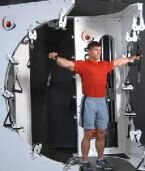
Rotator Cuff problems have become ubiquitous in not only throwing athletes, but in sports like tennis, golf, and swimming as well. Our unique program addresses muscle imbalances and provides a carefully designed sequence of exercises to develop strength and flexibility.

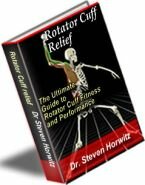
Dr. Horwitz's book and Dvd ROTATOR CUFF RELIEF are available at our office or online.

"Preseason Preparation: The student-athlete should be protected from premature exposure to the full rigors of sport. Preseason conditioning should provide the student-athlete with optimal readiness by the first practice."
The 2005-2006 NCAA Sports Medicine Handbook, p. 6

CPR/AED TRAINING

We can provide American Heart Association CPR/AED training to athletes, coaches, and parents. Call today to schedule a class.

Sudden Cardiac Arrest kills at least 350,000 people in the United States each year, more people than all forms of cancer combined.

ROID BUSTERS

Roid Busters is a steroid education program for high school, middle school, recreation department, and league coaches, parents, and athletes. The program discusses what steroids are, how they work, how they are taken, reasons for their use, and warning signs of abuse. Other ergogenic (performance enhancing) substances are discussed as well as the most common nutritional supplements that athletes take. Sports nutrition and sports performance training are reviewed because a proper diet and proper training can provide tremendous results without the use of these dangerous and illegal substances. Contact us to schedule a presentation for your organization.

For more information on Anabolic Steroids, click here.

"...the incidence of overuse injuries sustained by young athletes could be reduced by 50% if more emphasis was placed on the development of fundamental fitness abilities before sports participation." "...the National Athletic Trainers' Association suggests that high school athletes engage in conditioning activities at least six weeks before the start of practice." Faigenbaum, A., Schram, J. Can Resistance Training Reduce Injuries in Youth Sports? Strength and Conditioning Journal 26(3) p18. 2004.

National Center For Sports Safety

SPORTS SAFETY EDUCATION FOR REC AND LEAGUE COACHES

"There is not one parent that would drop their child off at a local community pool if there were not a certified lifeguard on duty. That same standard of care should be available at every sports facility in this country," says National Center for Sports Safety Lawrence Lemak, M.D.

Youth athletes, ages 14 and under, are at risk because many coaches are parent volunteers, who have not received adequate sports safety education. If an athlete became very thirsty, mentally confused and nauseated, he/she may have been suffering from a low insulin level which could lead to a diabetic coma, or it could have been a sign of dehydration. Would you or your coaches recognize either of these potentially hazardous conditions?

In the state of Maryland public high school coaches must take a 15 hour course called Care and Prevention of Athletic Injuries (see below), but there no sports safety NO REQUIREMENTS for league and rec coaches! Read the article Most Youth Sports Coaches Don't Have Safety Training.

The P.R.E.P.A.R.E. Course

P.R.E.P.A.R.E. is a comprehensive sports safety course developed by the National Center for Sports Safety (NCSS) in conjunction with the National Athletic Trainers' Association. It is aimed at educating coaches, particularly volunteer moms and dads, on how to prevent common sports injuries, how to recognized symptoms of potentially dangerous conditions, and how to respond in emergency situations.

P.R.E.P.A.R.E. is a three hour class which covers everything from minor injuries, like blisters, nose bleeds and ankle sprains, to life-threatening situations such as head and neck injuries. The course focuses on seven key areas: As an NCSS Sports Safety Affiliate, the Maryland Sports Injury Center has partnered with the NCSS to bring this sports safety course to the coaches and teams in our local community. Coaches who complete this course will receive a Certificate of Completion, a Sports Safety Patch, a 101 page Sports Safety Coach's Manual

Why Should You P.R.E.P.A.R.E.?

The P.R.E.P.A.R.E. course will not only make your athletes safer, it will benefit your organization as a whole. By being proactive and more knowledgeable, your coaches, staff and volunteers will be more equipped to avoid preventable injuries which can reduce risk. In addition, your group's commitment to sports safety education for its coaches will be another way to differentiate your program.

Coaches will gain the confidence to responsibly respond to emergency situations, significantly reduce liability where athletic injuries are concerned, learn valuable information about sports safety and how to reduce risks, and gain knowledge that can be beneficial on and off the playing field.

ARE YOU SURE YOU ARE PREPARED?

Read the following articles about the tremendous increase in youth injuries and the need to understand injury prevention:

To an Athlete, Aching Young - TIME MAGAZINE
Doctors See a Big Rise in Injuries to Young Athletes - N.Y. TIMES
Intensive Training and Sports Specialization in Young Athletes - AMERICAN ACADEMY OF PEDIATRICS
Overuse Injuries in Children and Adolescents - THE PHYSICIAN AND SPORTSMEDICINE

For a sobering report on catastrophic injuries in high school and college sports read:
National Center for Catastrophic Sport Injury Research - Twenty Third Annual Report